Nov 3, 2010 6
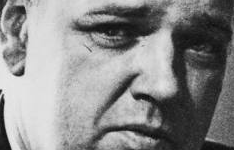
Whittaker Chambers, by Richard Reinsch
–
He heard the screams
–
 Whittaker Chambers: The Spirit of a Counterrevolutionary
By Richard M. Reinsch II
(Indianapolis: ISI Books, 2010)
(Reviewed by Gary Saul Morson)
(Excerpts from “He Heard the Screams,” published in the November 2010 issue of The New Criterion)
Why do otherwise decent people embrace ideologies that entail the killing of millions? What is the appeal that made so many people, especially intellectuals, support Lenin, Stalin, Hitler, and Mao? Whittaker Chambers argued that if we are to combat the most monstrous evil in the history of the world—totalitarianism, as invented in the twentieth century by Lenin—we must understand what draws some people to it and makes others incapable of countering, or even understanding, its appeal.
[…]
It is no surprise, then, to learn from Richard Reinsch’s biography Whittaker Chambers: The Spirit of a Counterrevolutionary that Chambers was deeply influenced by the greatest counterrevolutionary thinker of modern times, Fyodor Dostoevsky. Dostoevsky, too, had once been a revolutionary conspirator, for which he had served four years in a Siberian prison camp. Both counter-revolutionaries rethought their convictions, embraced God, and became innovative conservative thinkers.
[…]
Chambers famously wrote that, in breaking with Communism and testifying against it, he was joining the losing side. I am not old enough to remember that testimony, but I do remember when both liberals and conservatives thought that the Soviet Union would soon outproduce us and, most likely, take over the world by the sheer power of example. So far as the Soviet Union goes, that thinking turned out to be completely mistaken. But, as Reinsch points out, Chambers’s point still holds. There are two ways in which freedom can lose—not only by challenge from without but also by gradual erosion from within. Freedom loses when people no longer value it. As recently as twenty-five years ago, most college professors I knew still believed in democracy, free elections, and free speech, even for their opponents. They stood up for Salman Rushdie. Now most have such contempt for hoi polloi that they do not see the point of allowing them to spread their ignorant lies. The rest of the faculty, who do cling to outmoded ideas of freedom, are embarrassed to express them.
Reinsch’s biography prompted me to read Witness for the first time. I discovered in it what I do not hesitate to call one of the great autobiographies of world literature. I could teach it alongside the autobiographical parts of Solzhenitsyn’s Gulag Archipelago and even Tolstoy’s Confession. Chambers thinks deeply and commands a unique and powerful style.
For that very reason, Reinsch’s treatment falls short. It’s not that he gets Chambers wrong. He’s accurate, but in the way that one of the better editions of SparkNotes conveys an accurate, if simplistic, version of a great author’s “message.” Part of the problem is Reinsch’s appalling prose. In one characteristic passage, he explains that
Chambers never charged his nation’s leaders with possessing overt sympathy to Communism. Rather, the Western leaders were unable to understand an enemy who pursued immanent ends with transcendent fervor due to their own paucity of spirit.
I had to read this sentence three times before I realized that, despite the syntax, “paucity of spirit” pertains not to the enemy but to the Western leaders. Such sentences make reading this book an irritating experience. Where Chambers writes with passion and palpability, Reinsch offers fuzz. His prose muffles the screams.
Gary Saul Morson is Chair of Slavic Languages & Literature at Northwestern University.
(Please click here to read the complete article)
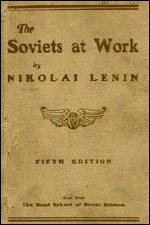 In 1923, he visited Western Europe, still lying in the ruins of World War I. By 1925, he saw a “dying world… without faith, hope, character” [Witness, p. 195]. He came across a little book by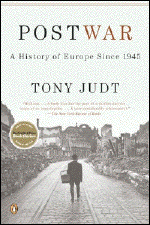
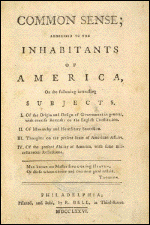 While it may seem to parade in Marxist trappings, Ill Fares the Land is closer to the American book of another British transplant and radical,